How to organise your shirts without turning it into a perfect-wardrobe project
A practical way to make a busy shirt rail easier to use, one decision at a time.
· 5 min read · Tania Cottew
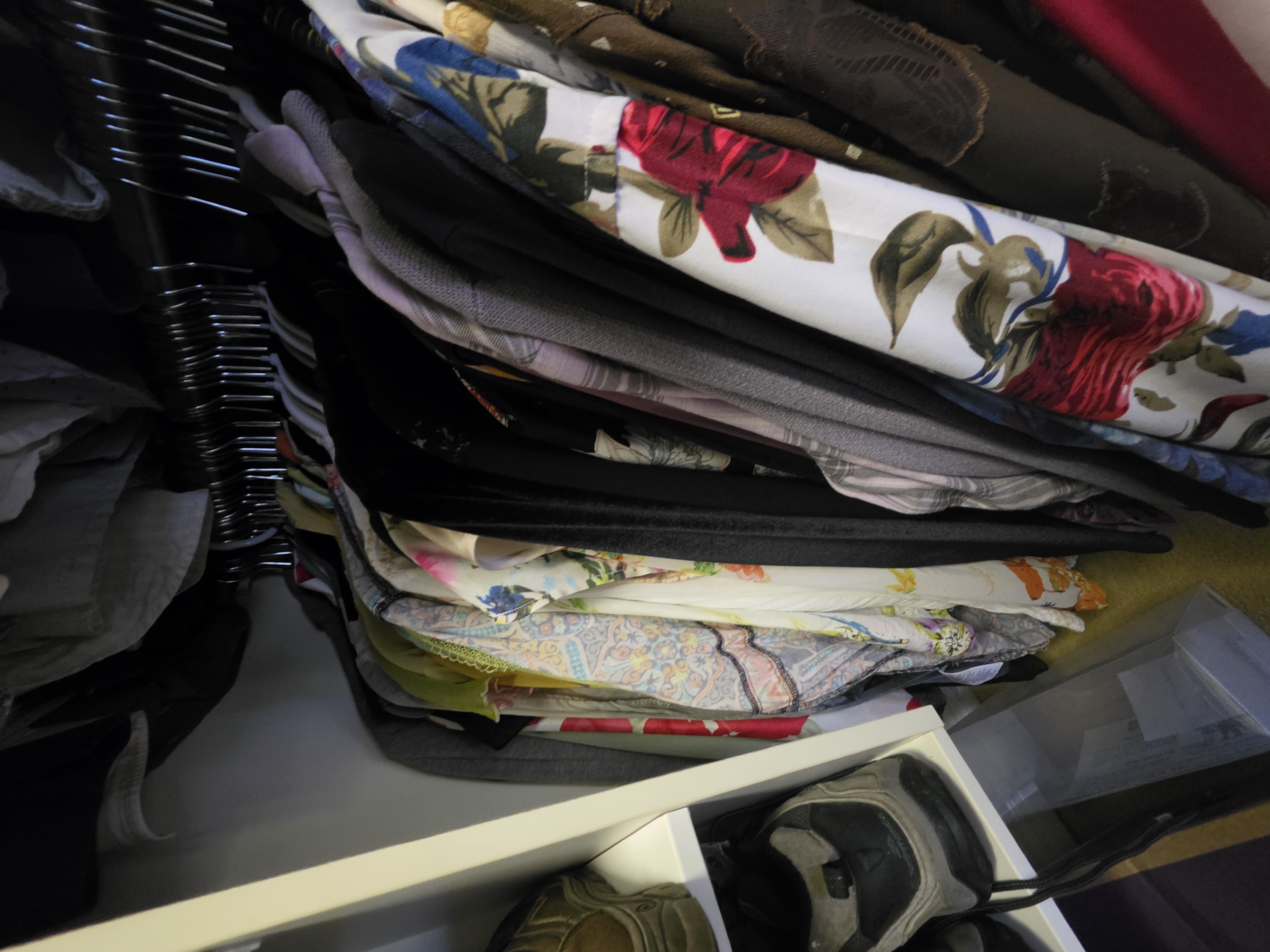
A shirt section does not have to become a beautiful, colour-perfect display to be useful. It only needs to answer a few ordinary questions quickly: what is here, what can I wear in today’s weather, and where will I find it again?
The most helpful approach is to organise for the way you actually dress. Start with the shirts that are causing the daily frustration, and leave the rest of the wardrobe alone for now.
Choose the boundary before you start
Decide exactly what is being organised: shirts only, or shirts plus tops that need the same care? Write that boundary down if it helps. The important thing is not to let one rail quietly become a whole-wardrobe project.
Take out anything that clearly belongs somewhere else, such as a dress, jacket or accessory. Put it in a small temporary pile or basket to return later. You are creating a workable shirt section, not making a decision about every garment you own.
Give the clothes a temporary landing place
Before you remove anything from the rail, choose where it will go. A bed, chair or clear section of floor can work, provided you know that the surface will need to be cleared before you finish.
If your energy or mobility is limited, work with a small armful at a time. There is no prize for lifting the whole rail in one go. A slower sort that you can complete is more useful than an ambitious sort that leaves the room unmanageable.

Sort by care and sleeve length
Begin with the distinctions that affect your real choices. Keep delicate or ironing-requiring pieces together if that helps them stay in good condition. Then separate short sleeves and sleeveless tops from long sleeves.
This is especially useful in changeable weather. You are not trying to predict the season perfectly; you are giving yourself a short-sleeve place and a long-sleeve place to look when the temperature changes.
Use colour as a locating system
Within each practical group, arrange the shirts by colour. You can use whatever sequence feels natural: light to dark, warm to cool, or a rainbow order. The best order is the one you will remember next week.
Colour is useful because it turns a vague search into a specific one. Instead of looking through every hanger for “that shirt”, you can go to the green part of the short-sleeve group or the pale section of the long-sleeve group.
Keep a ‘not today’ decision separate from a ‘never’ decision
If something is not fitting the way you want today, or you are not in the mood for it, that does not automatically make it a discard. Put it in a clearly named holding group if you need to, and return to it another time.
You also do not have to buy a replacement for every colour or size gap you notice. First ask what else you already own that could do the job. A gap is information, not an instruction to shop.
Stop when the section is findable
The finish line is not a magazine photograph. It is being able to open the wardrobe and locate a shirt without moving every other shirt first.
Take a quick photograph of the completed section if that will help you remember the arrangement. If you later change the order, change it because the new arrangement serves you better — not because you have failed to maintain a perfect system.
A useful wardrobe system should reduce decisions, not create another task to perform. Choose one section, make the groups meaningful for your weather and your clothes, and arrange the colours so your eye can find them. Then stop. Wear one of the shirts you found, and let the wardrobe prove its usefulness in ordinary life.