"How can I create a week of outfits from clothes I already own?"
· 6 min read · Tania Cottew
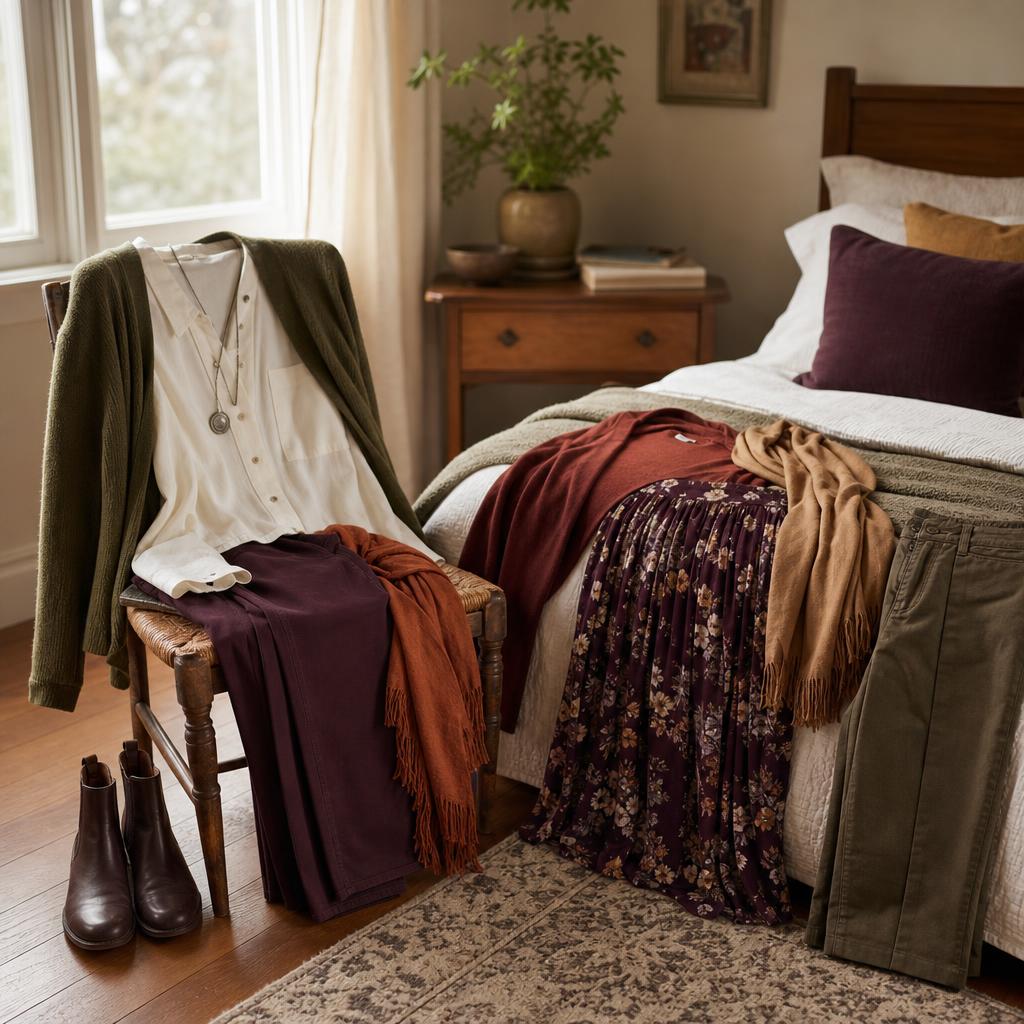
Dear Elemi, I want to make getting dressed easier during the week. I have clothes I like, but my comfort, energy and body can change from day to day. Sometimes I want to feel polished; sometimes I need softness and freedom. How can I plan outfits without making the whole process feel like another task?
Begin by releasing yourself from the idea that a week of outfits has to be planned as seven complete, unchanging looks. Your wardrobe is not a timetable. It is a collection of possibilities — and the most useful outfit is the one that can meet you where you are.
Start with three foundations At the beginning of the week, choose three outfit foundations:
The comfort foundation This is the combination you can rely on when your body needs extra kindness. Look for soft fabrics, gentle waistbands, forgiving layers and shoes that will not ask too much of you. A relaxed knit dress, stretch trousers or a flowing skirt can be the beginning. Add a cardigan or coatigan for warmth, rather than building the outfit around something restrictive.
Comfort is not the absence of style. It is the first condition of feeling at home in what you are wearing.
The confidence foundation Choose one outfit that makes you feel unmistakably yourself. It may be a colour that brings warmth to your face, a favourite silhouette, a beautiful scarf or a piece with a little history. Do not save this outfit only for occasions that seem important enough. An ordinary Tuesday may deserve your favourite colour too.
The adaptable foundation This outfit should be able to change with the day. Perhaps it begins with a blouse and trousers, then gains a jacket for a meeting. Perhaps a dress works with a lightweight cardigan in the morning and a scarf by evening. Perhaps comfortable boots make it suitable for both errands and lunch. The best adaptable outfits are built in layers, not rules.
Dress for your real weather Weather is part of the outfit, not an inconvenience to be endured. For a cool, overcast spring day, think in terms of a light foundation, a flexible middle layer and one outer layer that can be removed. A bodysuit beneath a blouse can offer security and ease; a coatigan can add warmth without the weight of a winter coat; a scarf can be folded away when the afternoon brightens. If it is especially cold, hidden thermal layers can make a surprising difference. A thermal top beneath a fully concealing crew-neck or roll-neck garment can add warmth without changing the appearance of the outfit. Fine thermal leggings are especially useful beneath trousers on colder days — a small secret that makes the whole day more comfortable.
Use a two-outfit plan Rather than planning one perfect outfit, prepare: · a main outfit for how you expect the day to begin; · a kind alternative for how you might feel later. The alternative might simply be a softer cardigan, flatter shoes, an open jacket or a less fitted layer. This is not failure or indecision. It is intelligent dressing.
Your body is allowed to change its mind.
Choose shoes according to the day, not the fantasy Shoes should support the life you are actually going to live. For walking, errands, markets or long periods on your feet, choose flats or low heels. A low heel of around 1–3 cm can still look polished while remaining practical. If you are going somewhere seated — perhaps dinner, a gallery or a short evening event — you may choose something more decorative, but there is no virtue in suffering for an outfit. A beautiful pair of boots is still beautiful when worn for the occasion it suits best.
Let colour do the emotional work When energy is low, colour can make an outfit feel considered with very little effort. Warm shades such as rust, olive, camel, burgundy, chocolate and ivory are especially lovely against warm colouring. They create a sense of harmony without requiring a complicated outfit. If you are unsure what to wear near your face, try a scarf first. It is a gentle way to test a colour and easy to change if the mood shifts. Patterned pieces can help too. Choose one accent colour from the pattern and echo it elsewhere — perhaps the burgundy in a floral print through a scarf, or the pink in a blouse through a small piece of jewellery. You do not need to match everything. You only need to create a conversation between the colours.
Keep one joyful challenge Every week, choose one combination that is not strictly necessary. Wear the romantic piece with something practical. Put a historical accessory with a modern garment. Combine two colours you usually keep apart. Let a familiar item take on a new role. This is how style stays alive. The challenge does not have to be dramatic. It might be as simple as wearing a cherished necklace on an ordinary day, or pairing a classic coat with a graphic shirt. The purpose is not to impress anyone. It is to remind yourself that your wardrobe still contains surprises.
A simple Sunday formula Before the week begins, choose: · one outfit for maximum comfort; · one outfit for confidence; · one adaptable layered outfit; · one accessory that brings colour or memory; · one unexpected combination to try. Then stop.
You do not need to predict every mood, temperature or change of plan. Leave room for the person you will be each day. The most successful wardrobe is not the one that produces perfect outfits in advance. It is the one that gives you options when life changes shape. So begin with what you have. Choose the pieces that feel kind, the colours that bring you alive and the layers that allow you to move freely.
Getting dressed is not a performance of having everything under control. It is a small daily conversation between you, your clothes and the life waiting outside the wardrobe door.
With warmth, Elemi 🌿